How to store your Pokemon cards properly
How to Store Your Pokemon cards Properly
If you're serious about collecting Pokemon trading cards, storing your cards properly is one of the most important things you can do to maintain their condition and value.
1. Why Proper Card Storage Matters
Trading cards are made of cardboard and ink—materials that are surprisingly fragile over time. Without proper storage, your cards can suffer from:
- Bending and warping
- Scratches and edge wear
- UV light fading
Even if you don’t plan to sell your cards, maintaining their condition ensures they remain presentable and enjoyable. And if you do want to sell them later, well-preserved cards always fetch better prices.
2. Basic Protection: Penny sleeves, Toploaders and Binders
From top left, clockwise: Penny sleeves (loose fit), Tabbed sleeves, Toploader, Cardsaver with promo card

Penny Sleeves
The basic rule for card protection is to always sleeve your cards. Penny sleeves are thin, transparent plastic sleeves that protect against dust, fingerprints, and surface scratches. They’re called “penny sleeves” because they’re extremely affordable, costing only a few cents per sleeve.
Penny sleeves are a non-negotiable if you want to preserve your cards. We recommend penny sleeving any card above $1.
Which Penny Sleeve is Right for You?
There are different types of penny sleeves and different opinions on which are the best.
Whichever sleeves you use, the important thing is to make sure that the sleeves are non-PVC and acid-free which cause damage to your cards over the long-term.
We would recommend using penny sleeves that are 66mm wide by 91mm high. We find these to give the best fit because Pokemon cards are 63.5mm by 89mm. There are tighter sleeves called "Perfect-fit Sleeves" but we do not recommend these as we find them to be too tight and can cause potential issues when you struggle to force the card in or out.
Another option are tabbed sleeves. These are sleeves that come with an extra appendage to facilitate removing the card from a toploader. These are only slightly more expensive and are a good option if that is your preference.
Finally, you can also use sleeves bought from the Pokemon Center but I would recommend double sleeving the cards by placing them in a penny sleeve first, then in the Pokemon Center sleeve.
Toploaders
Toploaders are rigid plastic cases that offer much sturdier protection. These are ideal for:
- Storing or transporting more valuable cards
- Mailing cards for trade or sale
Always sleeve your card first before putting it in a toploader to prevent scratches. We recommend using toploaders for any card above $5.
Cardsavers
An alternative to toploaders are cardsavers (sometimes called semi-rigids). Cardsavers are mainly used for:
- Storing promo cards in their original sealed packaging
- Sending cards in to grading companies for grading
Magnetic cases / One-touch cases
Another alternative to toploaders. These are suitable for displaying cards. If you want to use these, we recommend using perfect-fit sleeves.
3. Binders

Binders are basically albums for cards. They are an excellent way to store and organize your collection, especially if you're a set collector or like to browse your cards visually.
When choosing a binder, go for:
- Side-loading pages to prevent cards from sliding out
- Acid-free, PVC-free materials to avoid chemical damage over time
- Zip-up covers instead of elastic strap binders
There are binders for both penny sleeves and top-loaders. It is a matter of preference as both are adequate, but if you would like more security and protection, we recommend the binders for top-loaders.
Binders should be stored upright, like books on a shelf.
4. Environmental Protection: Light, Humidity & Heat
Cards don’t just need protection from physical wear they’re also vulnerable to environmental damage. This is a huge factor in hot and humid Singapore.
Keep Cards Away From Light
UV rays from sunlight or even strong indoor lighting can cause inks to fade and cards to lose vibrancy. Always store cards away from light sources. There are acrylic display cases that have UV-blocking properties if you must store them near light sources.
For example of the damage sun can do to a card (right copy has been sun-faded):

Picture from u/Ghost_wise on r/pokemoncards.
Control Humidity
Humidity is a major threat to your collection. High humidity can cause cards to warp and can cause mold. Even when not directly exposed to light, you will want to store cards away from the sun as the temperature fluctuations can cause warping. Japanese cards are especially prone to warping in Singapore's humidity. Warping refers to how the edges of a card start to bend upwards.


To prevent warping, keep silica gel packets or bamboo charcoal near your cards to absorb moisture. You can easily buy these on Shopee or other ecommerce sites!

While warping is not considered to be damage by grading companies, it is aesthetically unpleasing. If you have a warped card, you can place it in between a heavy book to straighten it out.
5. Grading for high-value cards
For high-value cards we recommend getting them graded at one of the various grading companies. This will encapsulate the card in a 'slab' and keep it well-preserved.
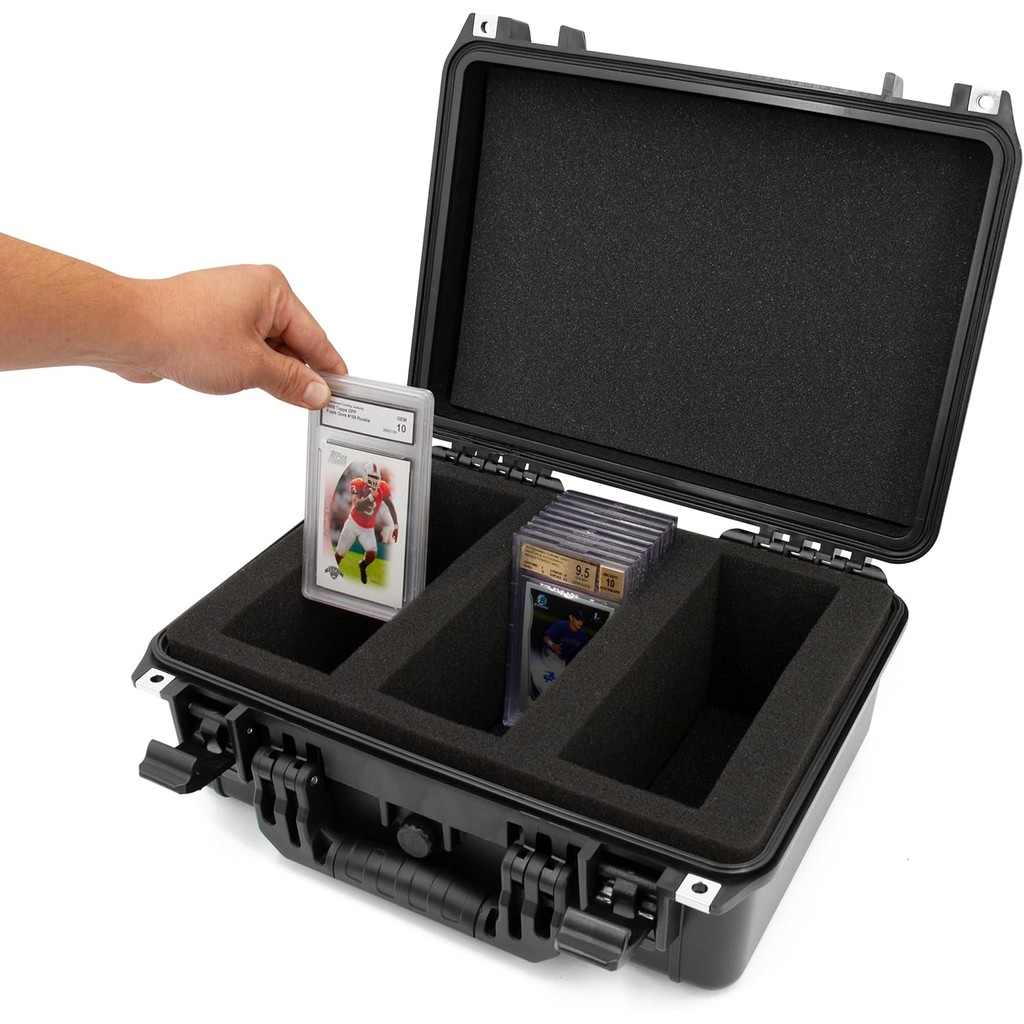
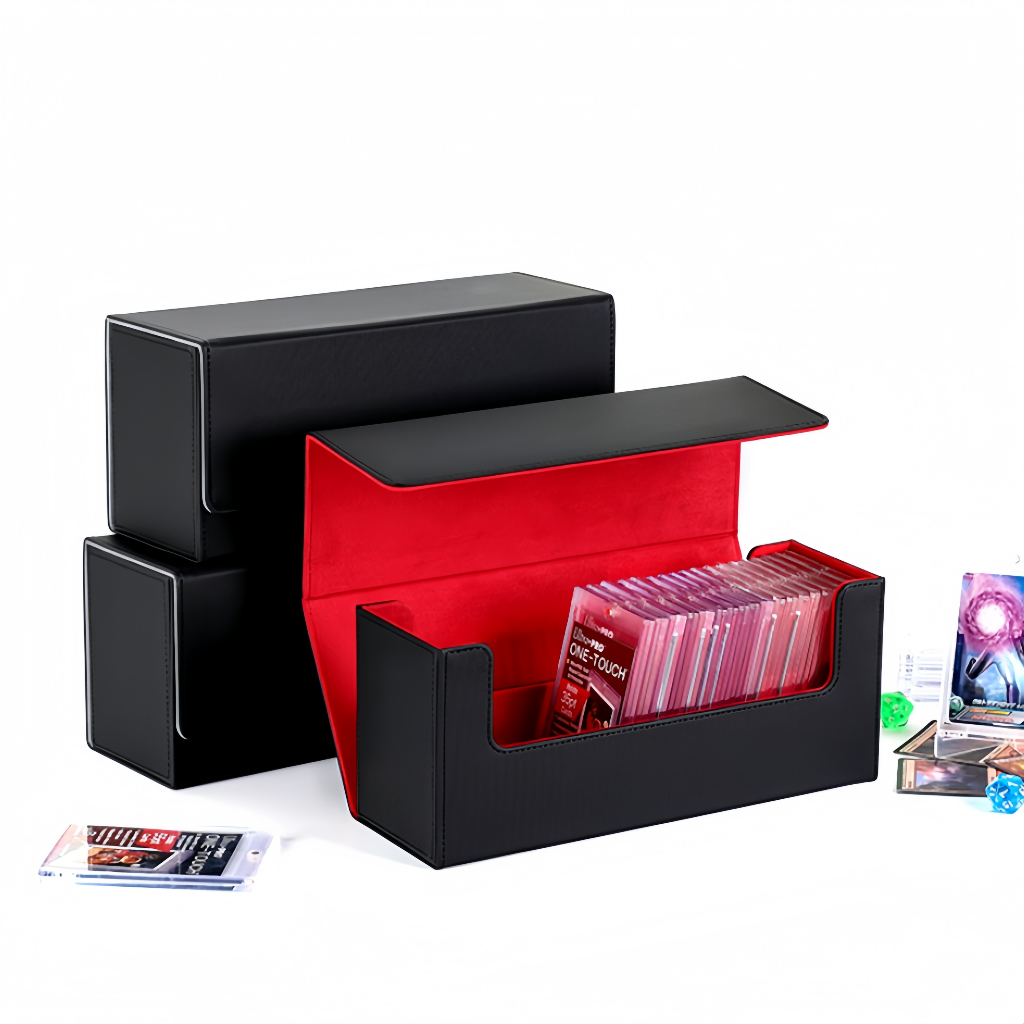
After grading, you can store the slabs in a slab binder, a padded box, in Graded Guards (kind of like a phone case but for slabs) or in storage cases. We don't sell any of these except Graded Guards which you can find here. Otherwise, all the other products are easily found on ecommerce sites in Singapore.
Box for slabs
Graded Guard for slabs

Storage case for slabs